



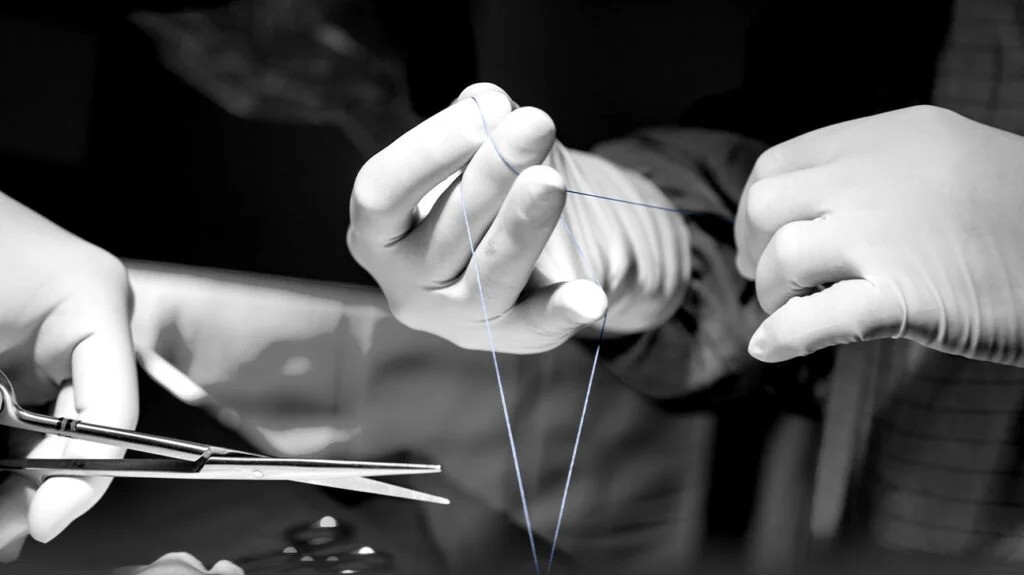
A surgical suture is used by the doctors to cover the wounds after surgery which helps the body tissues to hold together. It usually takes the wound several days to heal and it needs to be closed in a way to prevent bleeding and infection. The surgeons must select the optimal suture materials for ideal tissue approximation to provide effective wood healing and better scar aesthetics.
When it comes to suturing, it means application of the suture with the use of a needle along with an attached thread. Nowadays, there is a wide variety and types of surgical materials of different sizes, shapes and thread materials.
There are two types of terminology used in the surgery that most people confuse: suture and stitch. While suture is just the name of the medical device that is used by the doctor repairing the wound, stitching is simply the technique used by the doctors to close the wound.
Classification of surgical sutures:
Surgical sutures are classified based on the following categories:
- Category. The surgical sutures can be categorized as absorbable or non-absorbable. Given that the enzymes of the body tissues can digest the absorbable sutures in some cases the doctors do not need to remove them after healing. At the same time, the non-absorbable sutures need to be removed from the body after several days of surgery.
- Structure. The surgical sutures can be classified based on the structure of the suture material. The suture can comprise a single thread-monofilament that enabled the suture to go through the tissue easily and braided sutures consisting of many small threads braided together. The braided sutures are more secure however they can increase the risk of infections.
- Material. The surgical sutures can be classified based on their material: synthetic or natural. No matter of their material all sutures are sterilized.
Suture selection:
The selection process of suture materials used by the surgeons depends on the suture strand and diameter. The suture is attached to a suture needle. The needles are also graded based on their size and shapes and their selection depends on the surgery type being performed. It can have a cutting edge or a non-cutting edge. Based on their type large suture needles can cover more tissues at one stitch while the smaller needles reduce the scarring after the surgery.

The absorbable sutures of MegaMed Group provide strength retention and absorption profiles which meet my surgical specialty and tissue healing requirements at highest level.
Name Surname, Company name, position
With the MegaMed surgical sutures I have become more confident while dealing with high-risk cases.
Name Surname, Company name, position
I have experienced an evitable positive change in my daily surgical practice since I have been working with the surgical sutures of MegaMed Group, particularly using the non-absorbable sutures in high-risk incisions.
Name Surname, Company name, position
Reliable, easy to work with, good strength and durability.
Name Surname, Company name, position
Quality products, excellent service and timely deliveries
Name Surname, Company name, position
Best combination of price and quality in the market of surgical sutures.
Name Surname, Company name, position
I simply enjoy working with the sutures of MegaMed Group-smooth and durable, sharp needles.
Name Surname, Company name, position